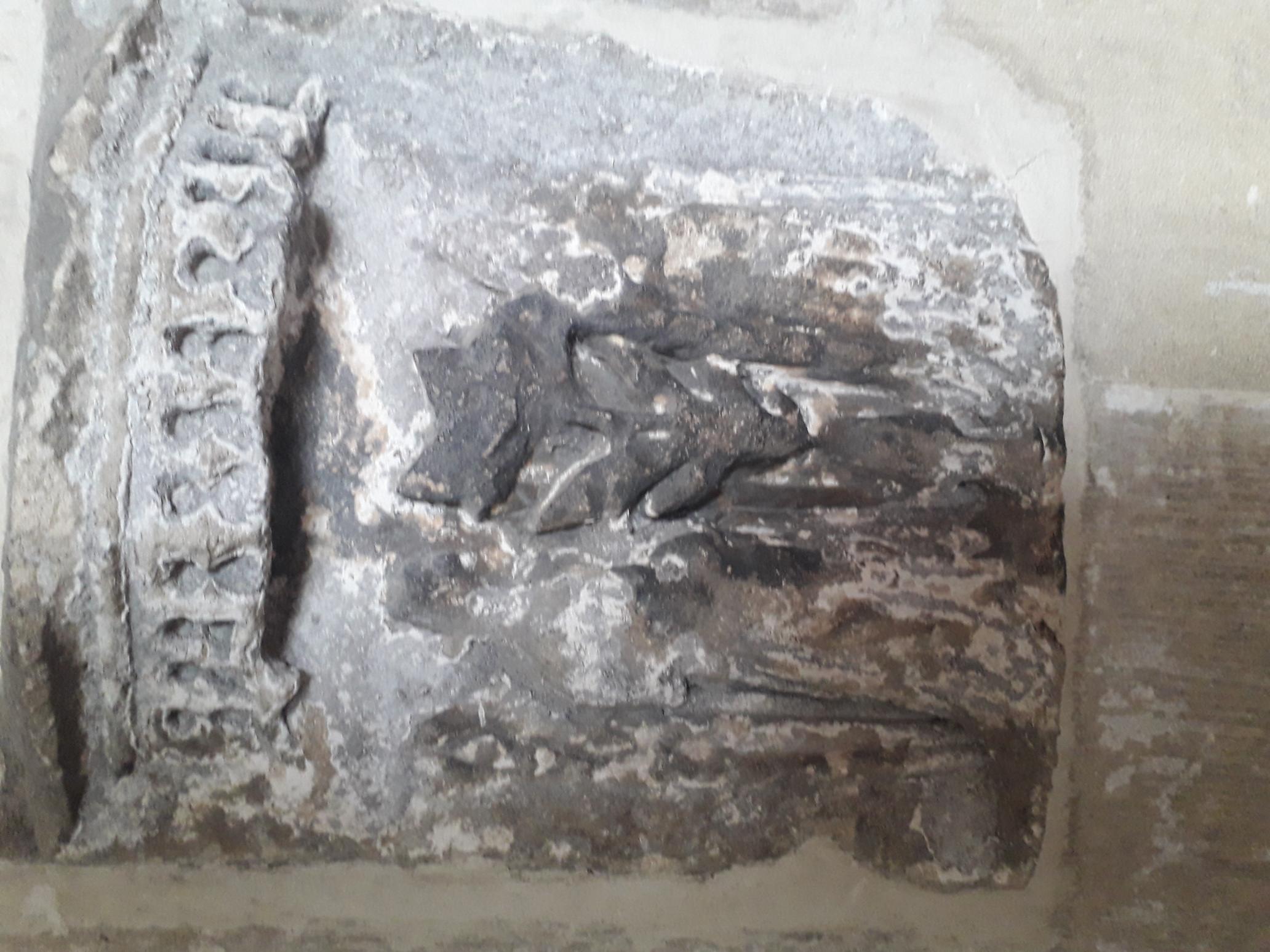
Carving of the Annunciation - Annunciation
In the sixth month of Elizabeth’s pregnancy, God sent the angel Gabriel to Nazareth, a town in Galilee, to a virgin pledged to be married to a man named Joseph, a descendant of David. The virgin’s name was Mary. The angel went to her and said, “Greetings, you who are highly favoured! The Lord is with you.” Mary was greatly troubled at his words and wondered what kind of greeting this might be. But the angel said to her, “Do not be afraid, Mary; you have found favour with God. You will conceive and give birth to a son, and you are to call him Jesus. He will be great and will be called the Son of the Most High. The Lord God will give him the throne of his father David, and he will reign over Jacob’s descendants forever; his kingdom will never end.” “How will this be,” Mary asked the angel, “since I am a virgin?” The angel answered, “The Holy Spirit will come on you, and the power of the Most High will overshadow you. So the holy one to be born will be called the Son of God.
To the south is a carved stone mounted into the column. This is thought to represent the Annunciation (the announcement by Angel Gabriel to Mary that she was to give birth to Jesus). It is eroded as it used to sit on the outside of the church, moved inside in 1872 during the Victorian Restoration.
Anecdote
Before 1872, the Georgian Church was filled with boxed pews, with a gallery above against the north wall of the Nave and a three-tier pulpit by the front north pillar. Between the war memorial and the Pulpit you can still see the closed doorway from which, in Georgian times, stairs led up to the gallery. As part of the Victorian restoration in 1872 the gallery was taken down and the box pews and three-tiered pulpit removed.
Bible Reading