The medieval Nave - Giving of the Holy Spirit
When the day of Pentecost came, they were all together in one place. Suddenly a sound like the blowing of a violent wind came from heaven and filled the whole house where they were sitting. They saw what seemed to be tongues of fire that separated and came to rest on each of them. All of them were filled with the Holy Spirit and began to speak in other tongues as the Spirit enabled them.
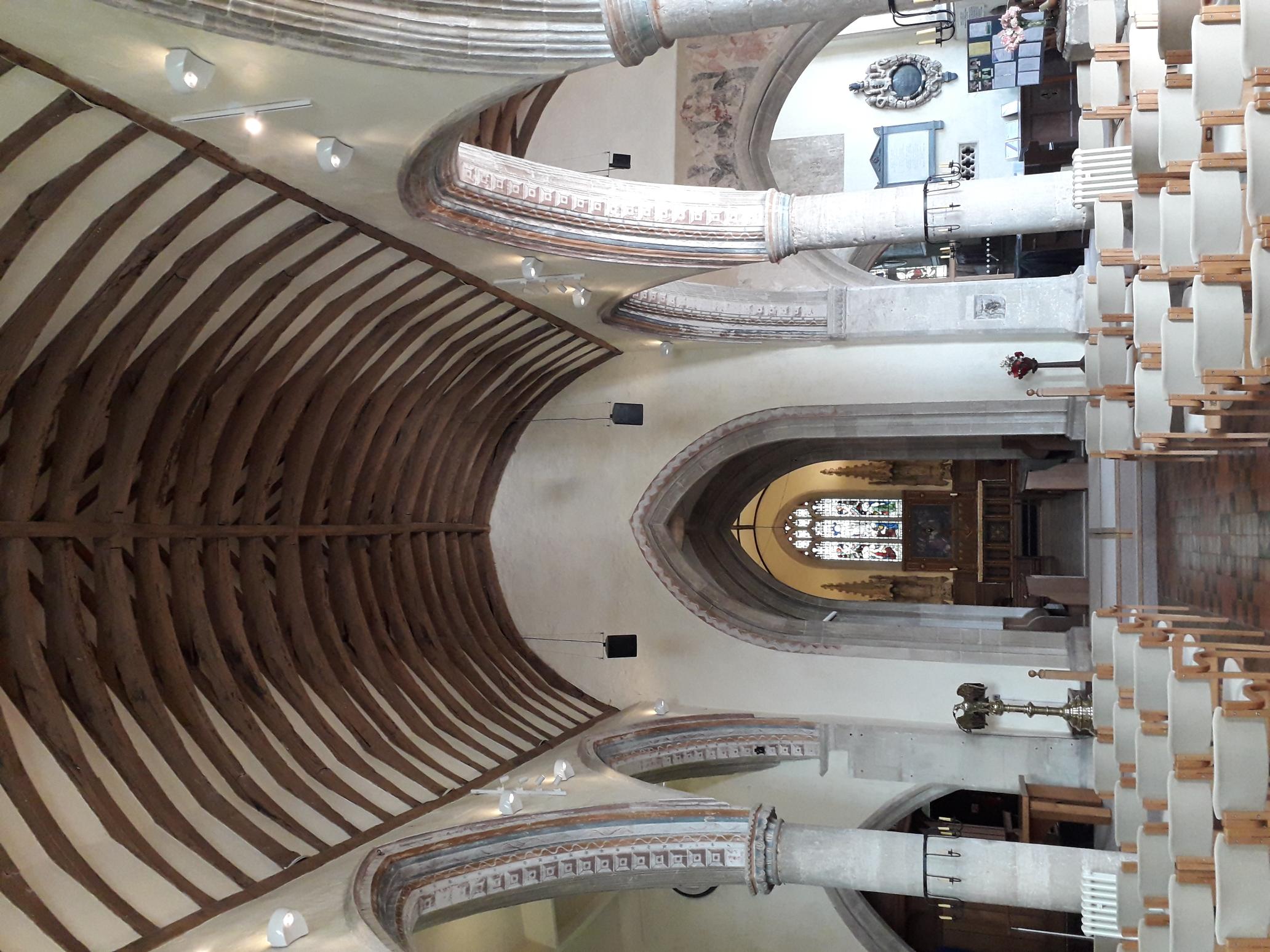
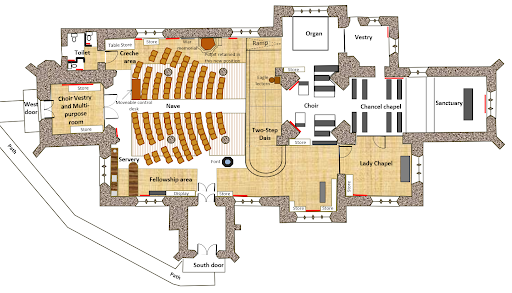
In a frame on the wall behind you is a plan of the building which uses colours to indicate the century in which different parts of the church were built. Look east again to enjoy the magnificent architecture! Look up and admire the medieval wooden beams that support the roof. Enjoy the uplifting view towards the High Altar, at the east end of the church. Enjoy the architecture, remember the thousands filled with the Holy Spirit who have worshipped here.
Anecdote
Now note the interesting pillars and arches in the Nave. The painting on them is probably Victorian, though traces of medieval paint can be seen on some of the south side pillars. Look carefully to see evidence of older, shorter pillars at the bottom, before new stones were added in the 15th century to create the grander church you see today. There are different capitals, the stones at the top. The simpler ones may well be Norman which may also show evidence of an earlier church. Look down at the Victorian floor. The medieval stone floor is about 50 cm underneath. The boarded part is where the Victorian pews used to be. The pews were removed in 2020 Renewal, though one has been retained, by the south wall, as a reminder of what they were like. Between the boards are tiled aisles, supported on brick arches below.
Bible Reading